
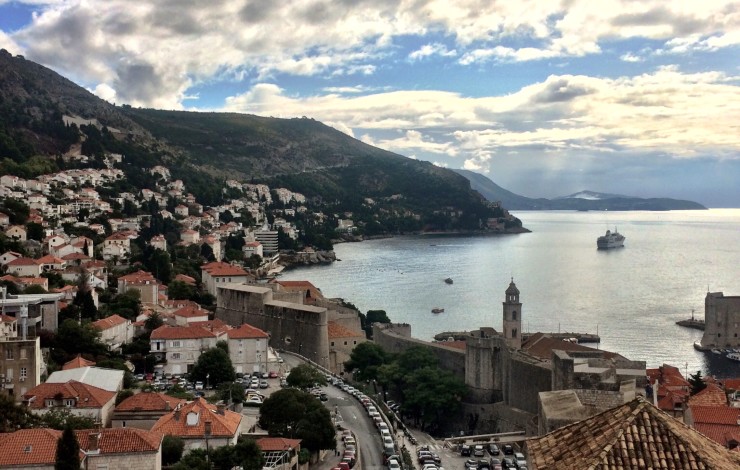
Dubrovnik, Day Two
When we signed up for our sea kayaking tour and our Game of Thrones walking tour, we were informed that we couldn't schedule a morning tour because they were filming a Game of Thrones scene (!!!). Instead of being good little fankids and stalking the filming location all morning, we decided to walk the city walls. We had heard that you should try to walk the walls early to avoid the crowds. We didn't get there as early as we had hoped, and there were quite a number of tourists up there. I know I've said this before, but we just couldn't believe how many tourists were in these areas in the shoulder season - high season must be absolutely miserable!

Fort Min?eta along the city walls

View from Fort Min?eta
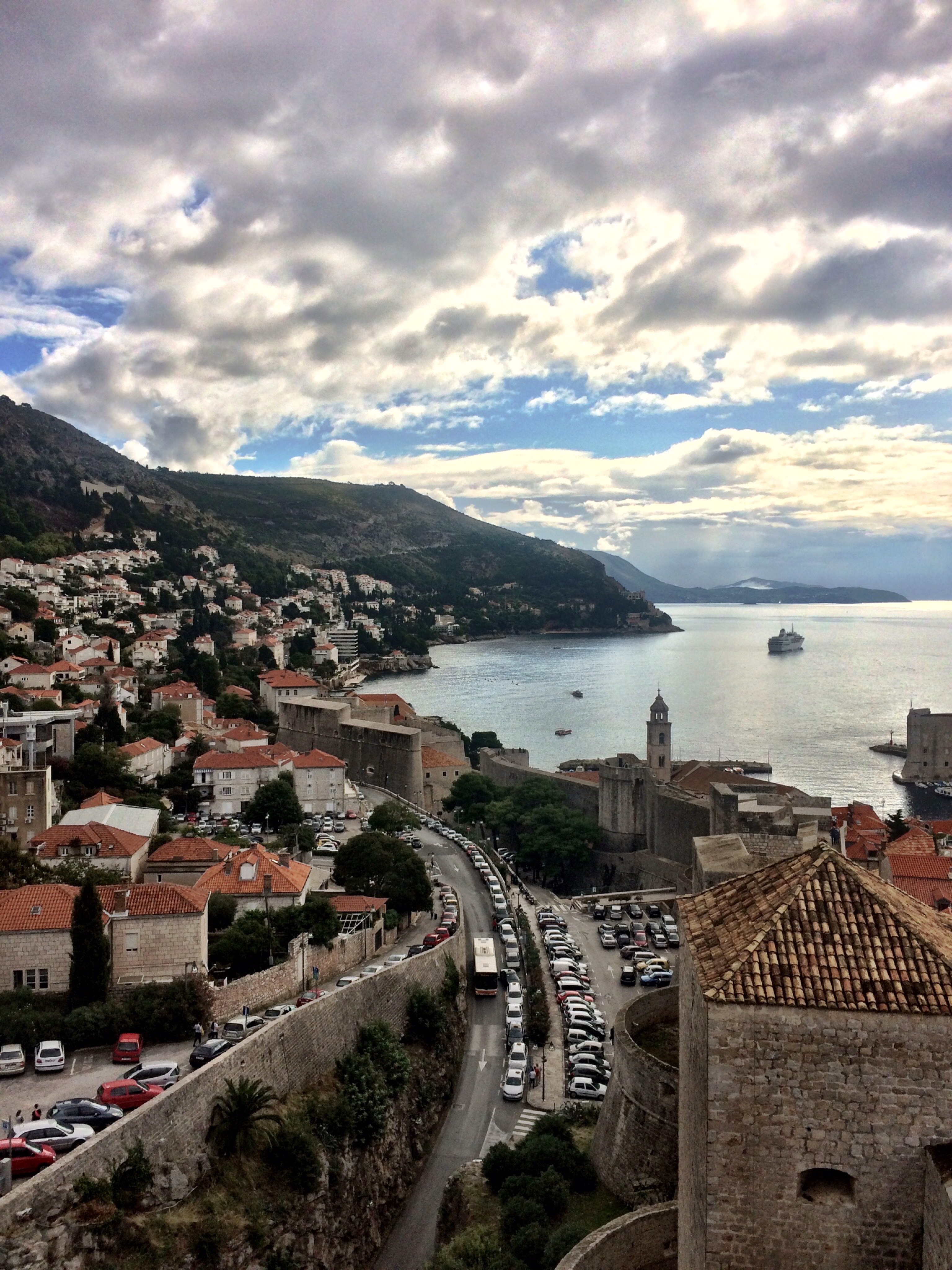
View southeast from the Dubrovnik city walls
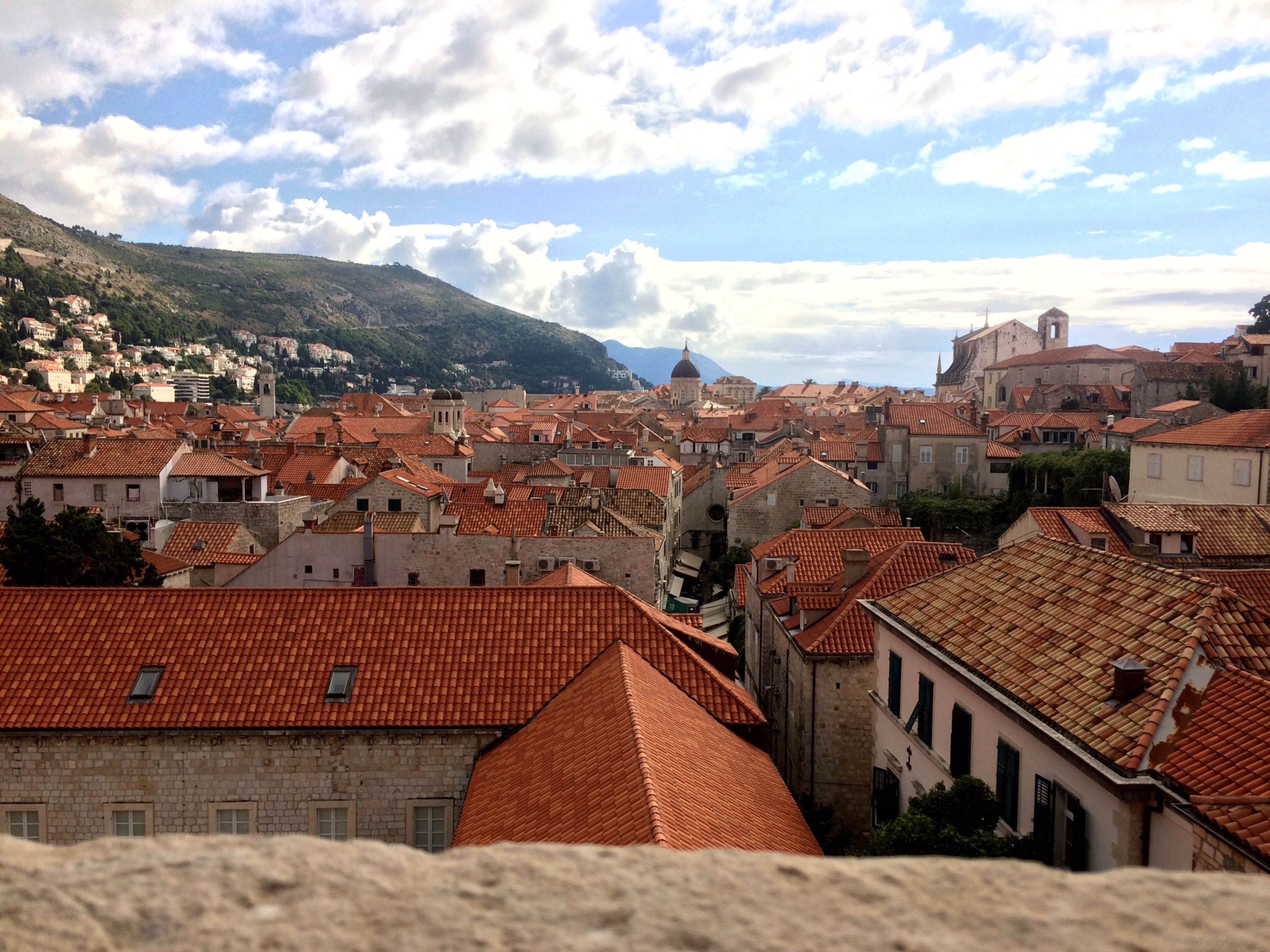
Sea of terra cotta roofs
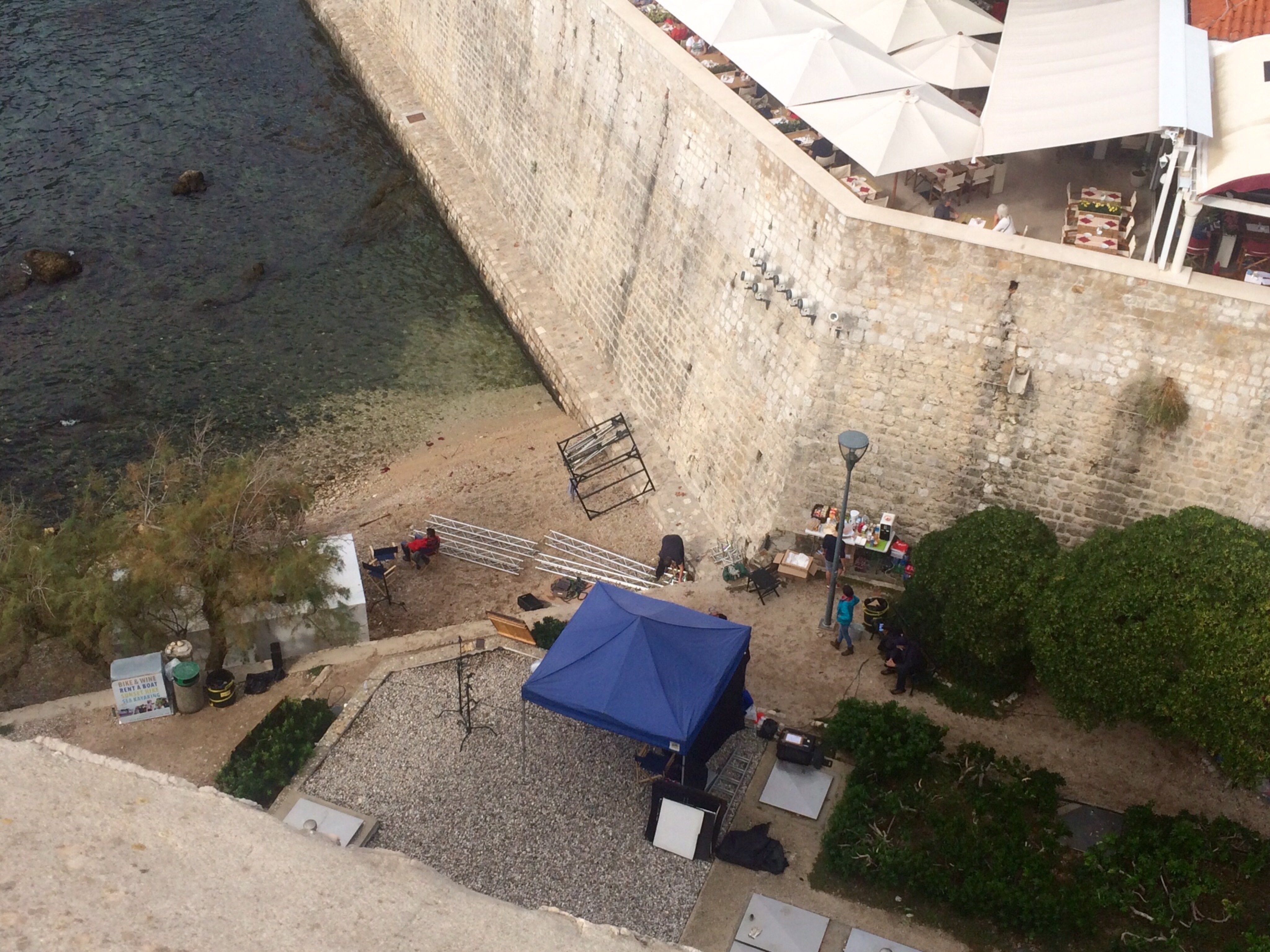
Our glimpse of the Game of Thrones filming
The city wall walk was neat. It's a great way to understand how compact Dubrovnik is. Looking across the terra cotta rooftops, one thing was very evident. Amongst the beautiful patinas of old rooftops are brand new burnt orange rooftops. Many of these new roofs were replacements for those damaged during bombing by the Yugoslav People's Army in Decemeber 1991. Although the Yugoslavian conflict happened over 20 years ago, the memories are still very evident.
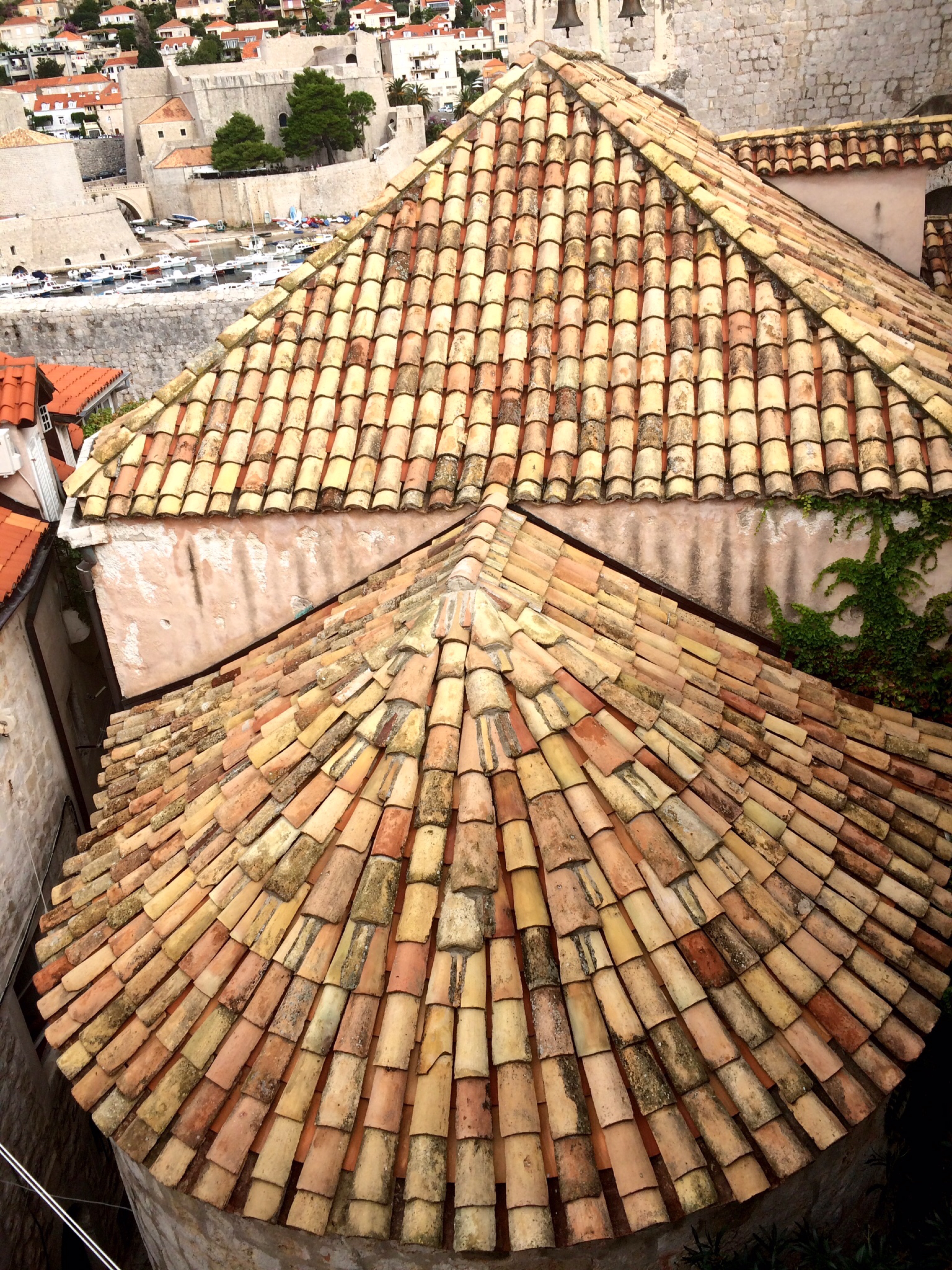
I couldn't get over the terra cotta patina texture
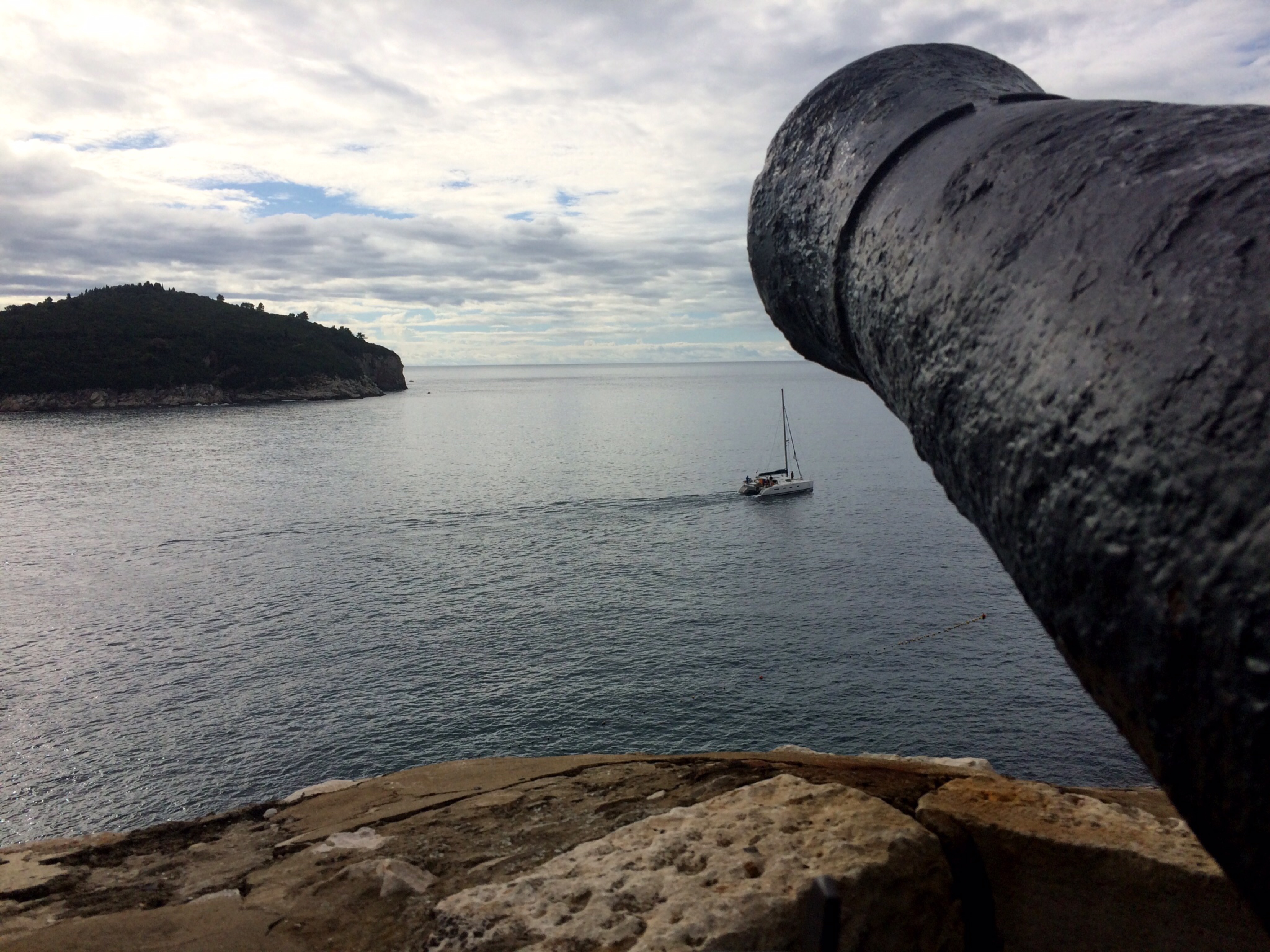
View towards Lokrum Island
The city walls gave a great glimpse of the fortifications that withstood every attempt to take the city. Dubrovnik has never once been captured, and that is because of the ideal location, the great design of the fortification walls and Fort Lovrijenac, or St. Lawrence Fort. The white stone walls are why Dubrovnik is known as the Pearl of the Adriatic. Dubrovnik was included on the UNESCO World Heritage Site in 1970. The walls themselves are 1940 meters (6365 ft) long and completely surround the entire city. The wall that connects to mainland Croatia is between 4 and 6 meters (13-20 feet) thick. The seaside walls, which obviously would be more difficult to attack in a seige, are only 1.5-3 meters (5-10 feet) thick. At its highest point, the walls are 25 meters (83 feet) tall. Tower Min?eta, Fortress Revelin, Fortress St. John, and Bokar Fortress are all located along the perimeter of the walls and protect the city. Fort Lovrijenac also protects the western part of the city from land or sea attacks.
Walking the walls took about an hour. After a quick lunch (durum doner from a fast food restaurant inside Old Town), we headed to our meeting spot for the sea kayaking adventure. In preperation for kayaking, we had worn our swim trunks and bathing suit. The company provided life vests, kayaks, sandwiches, water, snorkeling gear, a floating storage barrel for bags and purses, and a smaller floating storage barrel for phones and cameras. After a quick introduction to kayaking, our group set off from the Pile Gate beach to kayak around the city. It was pretty obvious that some members in our group struggled to maneuver the two-person kayak. Justin and I luckily were pretty good at being a kayak team, and we were able to keep up with the guide. The guide spoke about Dubrovnik the entire trip, so we wanted to be near him to hear the history.
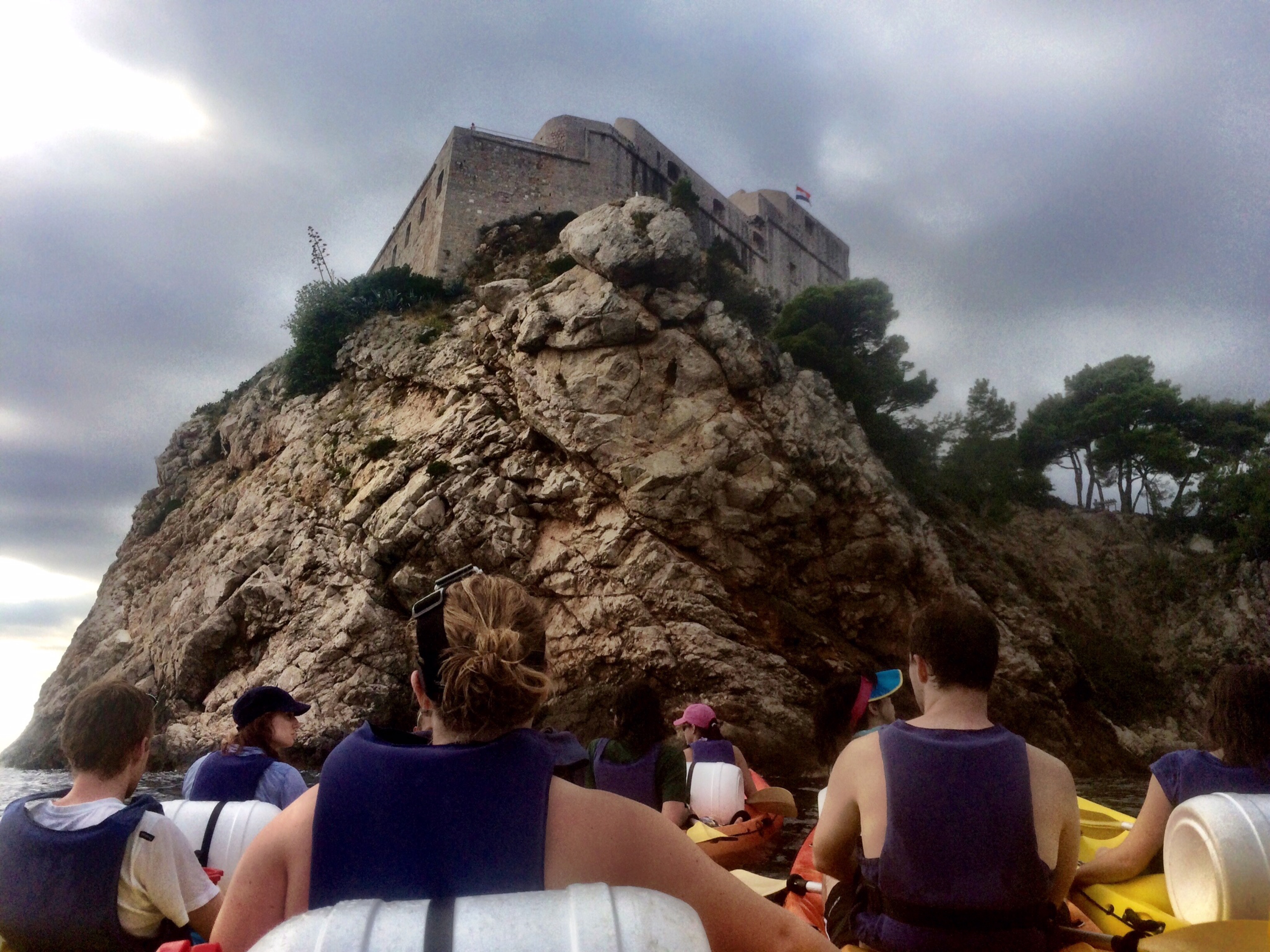
Kiley in front of Fort St. Lawrence
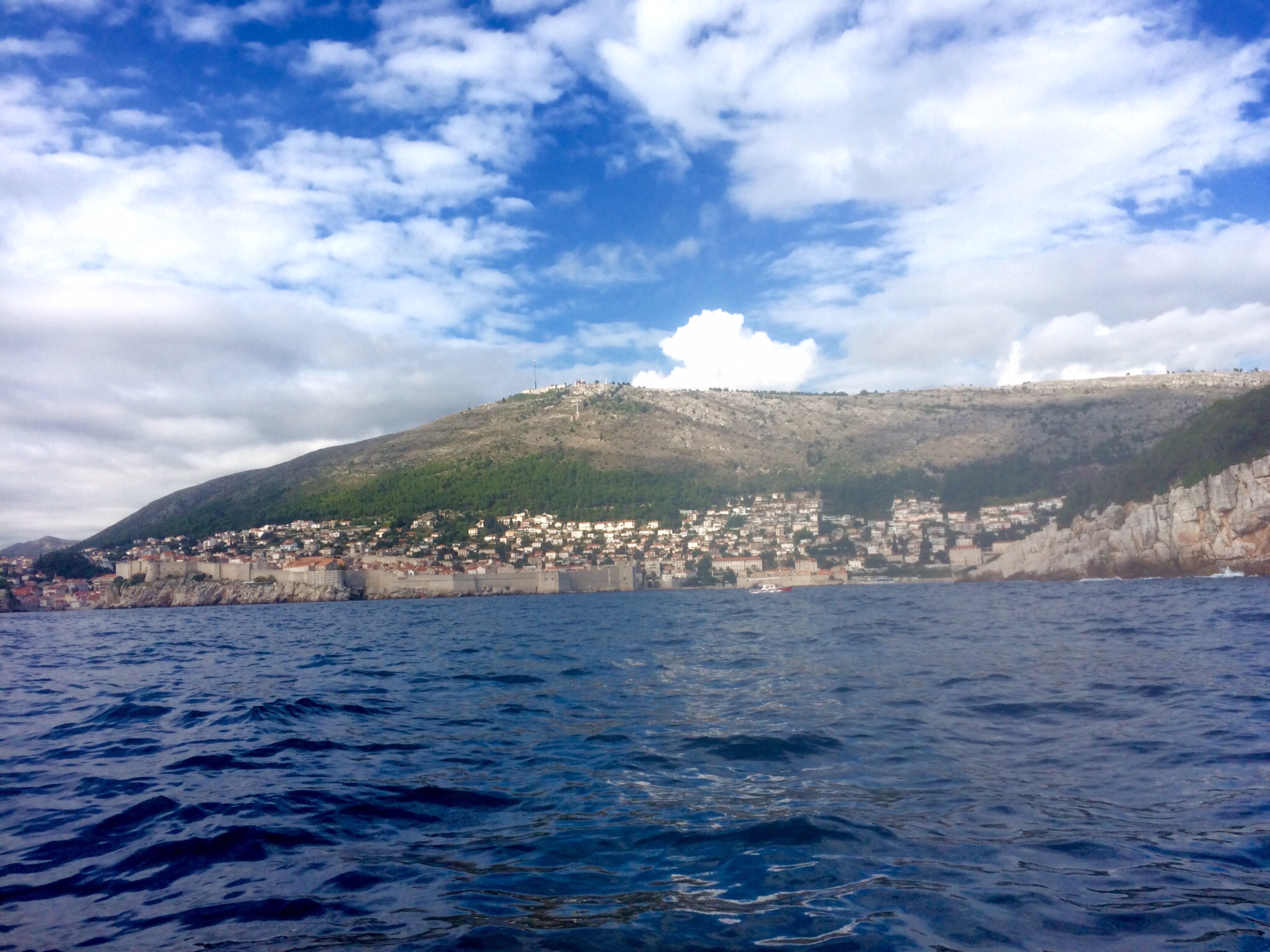
Dubrovnik from the sea
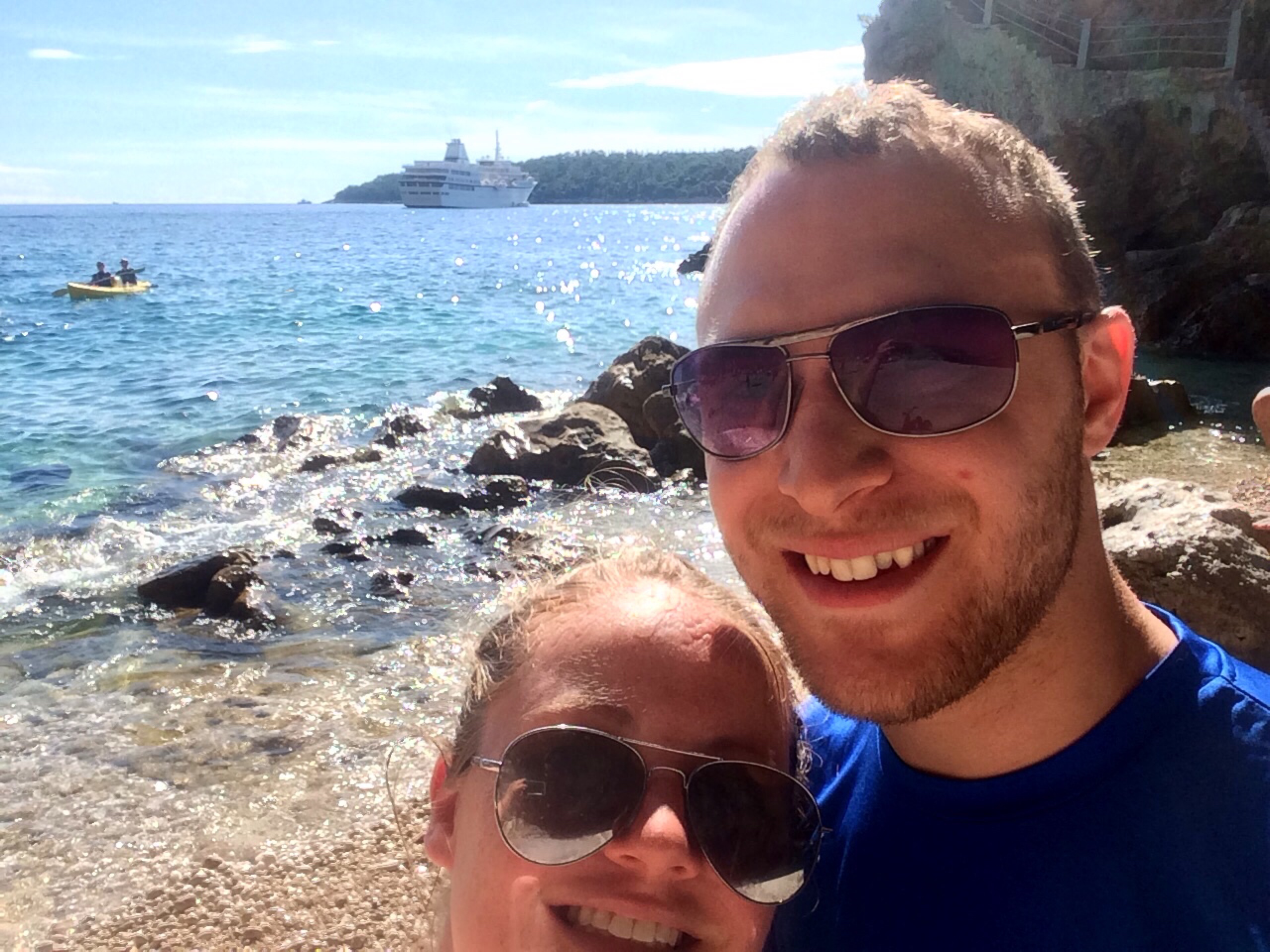
Our first task was to kayak around the city walls and cross the busy boat route in and out of the marina in the eastern side of Old Town Dubrovnik. We kayaked over to a large cave that lies below the newer parts of Dubrovnik to have lunch, snorkel, and cliff jump into the water. The fish would eat food right out of our hands. We snorkeled while our kayaking companions jumped from the rock cliff. In the distance between the rock cave and Lokrum Island, a giant cruise liner was anchored.
Lunch break, snorkeling, and cliff jumping at the cave
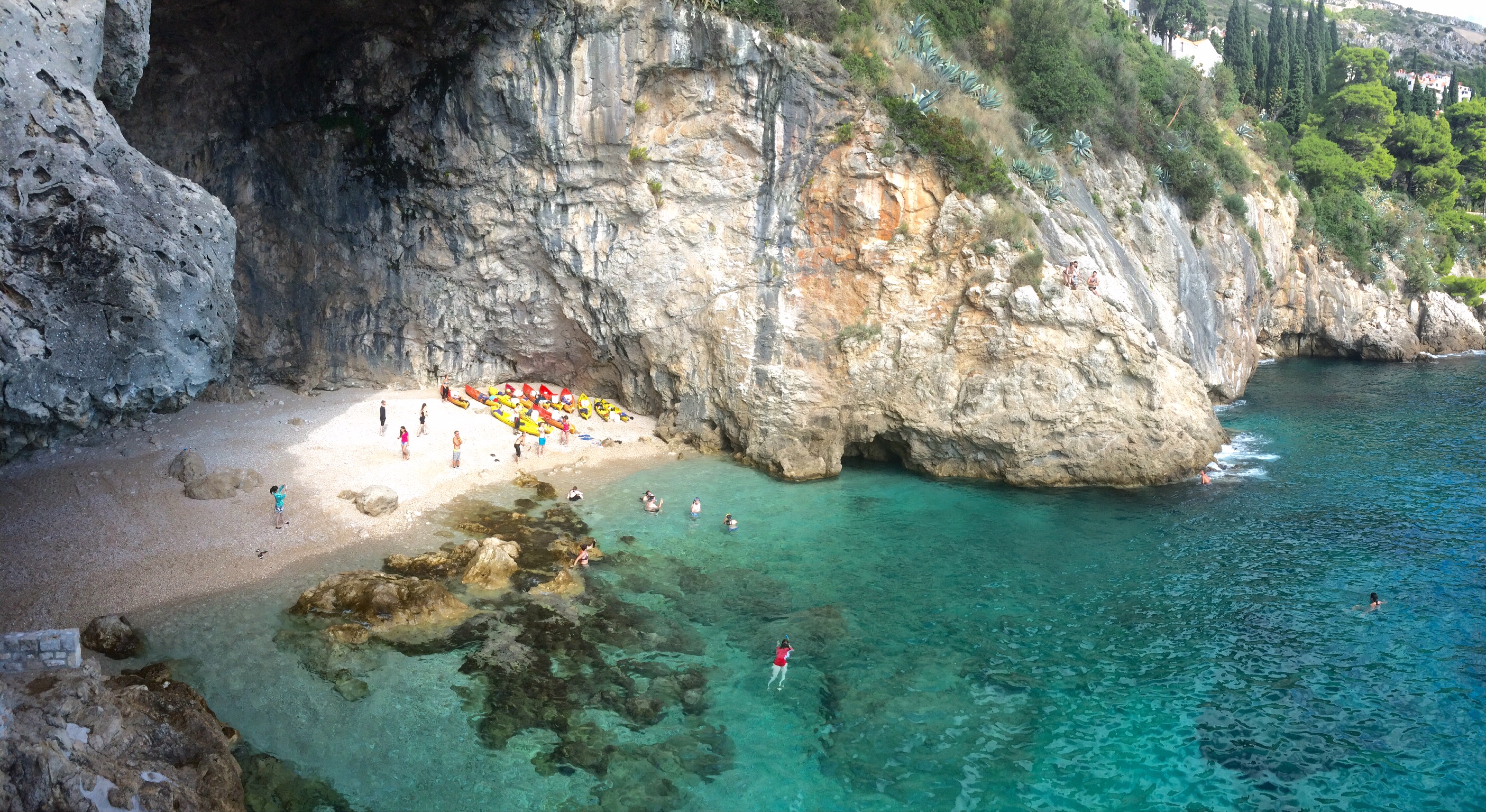
The cave and that gorgeous water
After a break in the cave, our group of kayakers split up. Those who were tired and exhausted from the journey thus far headed back to Dubrovnik, but we pushed on. A trip around Lokrum Island was too appealing to give up so quickly. And it certainly did not disappoint. Lokrum Island has quite an interesting history is is veiled in folklore. Our kayak guide Roko told us of a legend where In 1192, Richard the Lionheart was shipwrecked while returning home from the crusades. He made it ashore to the cave in the photo below and promised to built a church on the island. The people of Dubrovnik, however, convinced him to build a church in Old Town.
Previous to Richard the Lionheart, there was a Benedictine abbey and monastery built there in 1023. The monks were eventually forced off the island and replaced by a series of rich families that owned the island throughout history. However, it is said that the monks cursed the island so that all who owned it would meet a bad ending. And according to folklore, this was the case for all of the families. Today the island has an arboretum, a restaurant in the old monastery, hiking paths, a nudist beach, and an influx of peacocks.
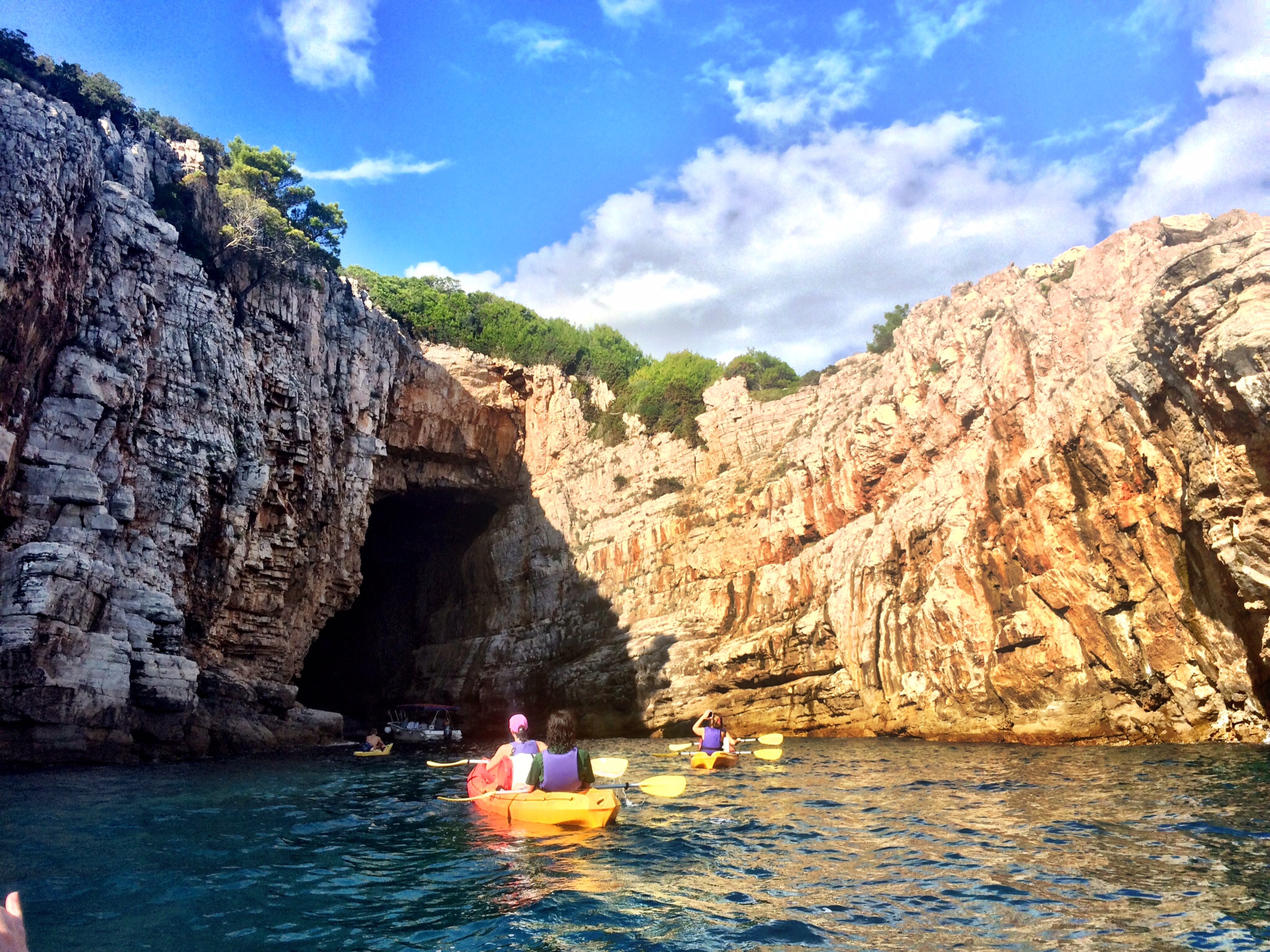
Cave at Lokrum Island
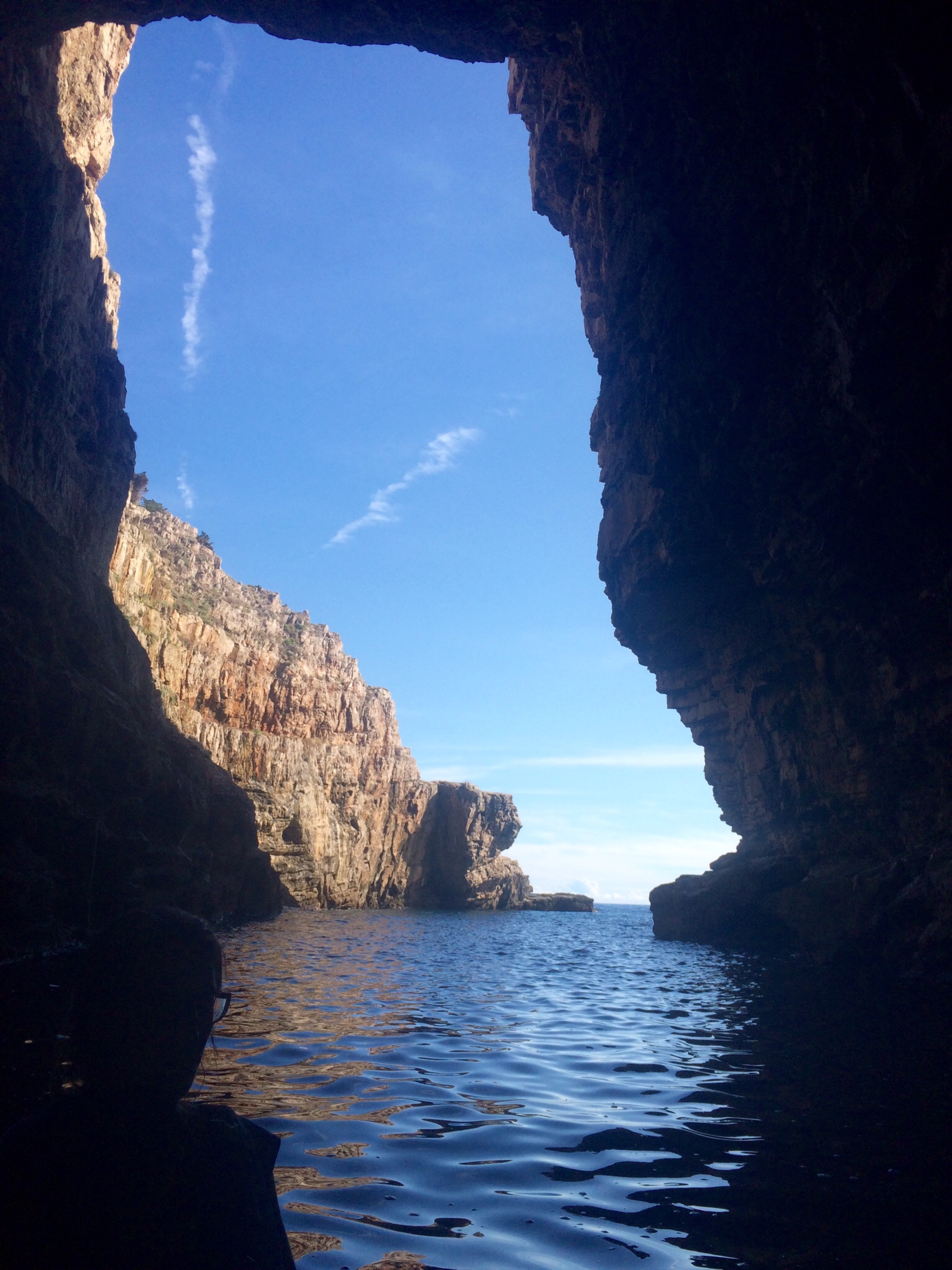
View looking out from the cave at Lokrum Island
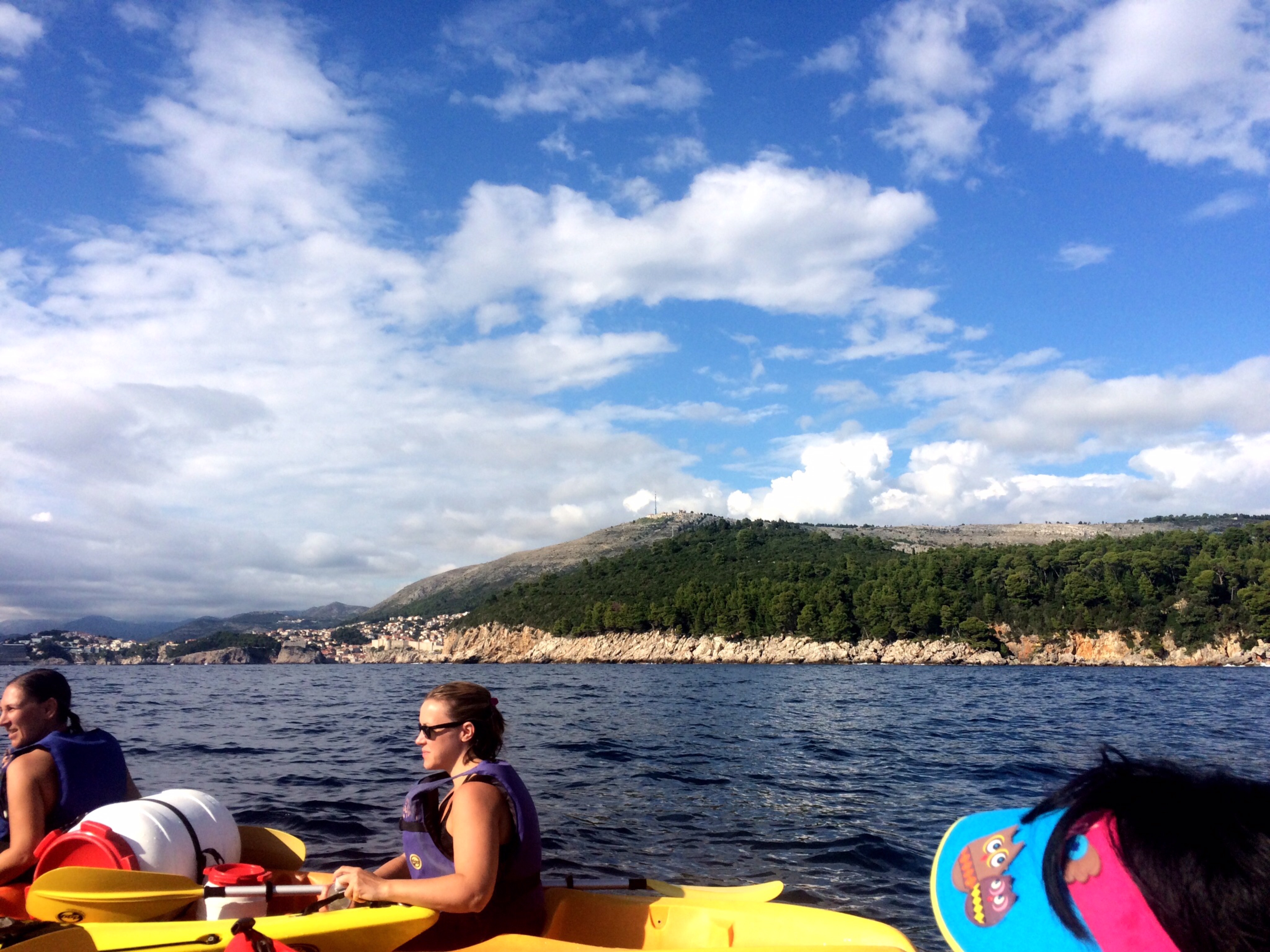
Lokrum Island
On our way back to our home base near the Pile Gate, our exhausted arms found no solace as the tide was powerful and kept pushing against our rowing. We did finally manage to get back, and on time thankfully. We quickly dismounted our kayaks, turned in our life vests, and hustled up the steps to meet up for our next adventure: Game of Thrones walking tour. We were met by Philip, a Serbian-born, Zagreb-raised man dressed in Game of Thrones garb who was to be our guide for the couple hours we were to be walking Dubrovnik. He was quite enthusiastic about this job (I suppose because no one wants a boring tour guide), very knowledgeable, and just the right amount of quirky to be very entertaining. Our tour group was small, as this was the last tour of the day, so our walking group was compact and within hearing of Philip, which was a plus. He gave us a packet of filming shots to compare with the locations we were visiting, which was a really neat way to learn about the show.
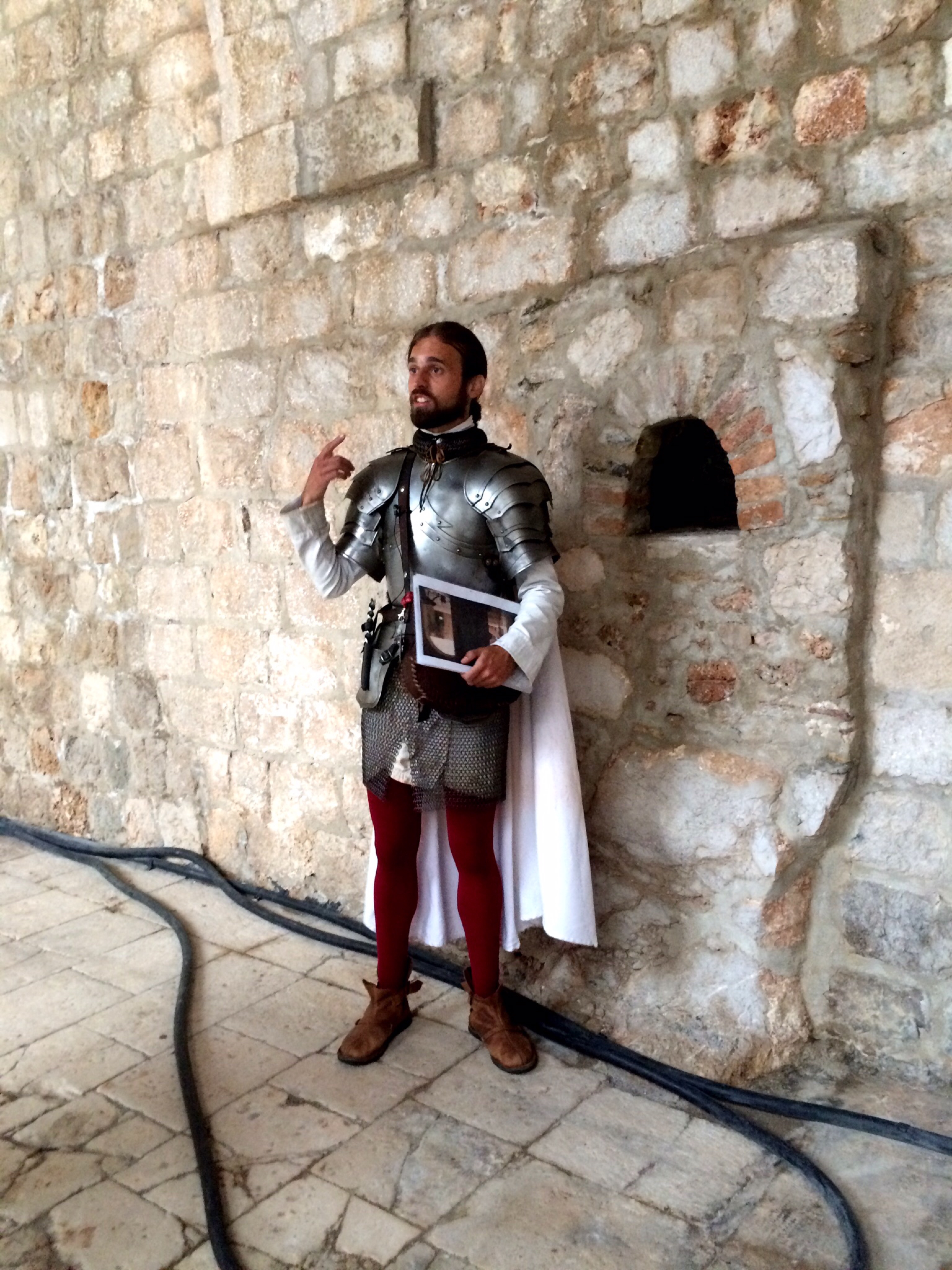
Philip, our Game of Thrones tour guide
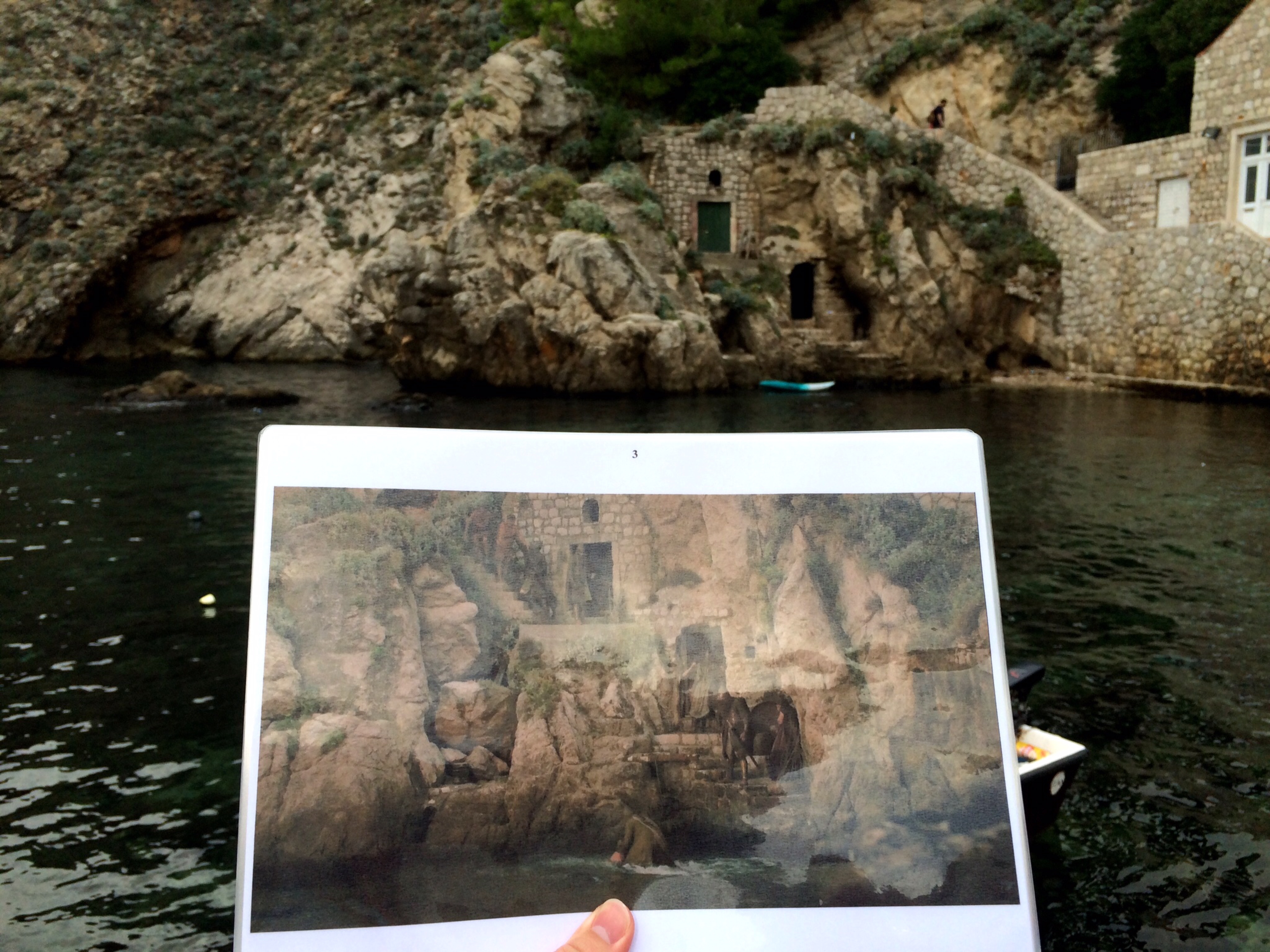
Comparison of a photo from the show and the actual location

Comparison of a photo from the show and the actual location
We started out learning about the history of St. Lawrence Fort. As architects, this place fascinated us quite a bit because the design of the fort directly contributes to the fact that Dubrovnik was never invaded. It sits 37 m (about 121 ft) above the sea. Its ideal location on the rock cliff to the southwest sits above the main entrance, Pile Gate, and watches over any entry into Dubrovnik via land and sea. Kalarinja, Dubrovnik's oldest harbor (and the filming location for all things Blackwater Bay from Game of Thrones), is below the fort. Dubrovnik was known as a friend to all but enemy to none (except the Venetians). They also had a huge network of spies stationed all over the world. Venice, the sworn enemy of Dubrovnik, put together plans and financing to build a fort at the then empty site of the future Fort St. Lawrence in the early 11th century. Luckily for Dubrovnik, the spies tipped off the city so that Dubrovnik officials had time to build a fort at that location in the short span of 3 months. When Venetian ships showed up with building materials, they found Fort St. Lawrence already standing on its site. The fort has been rebuilt many times, but it has always been successful in protecting the city.
The design of the fort itself had a seige in mind. The first defense is the stairs - it's quite a climb just to get to the top of the rock. Along the way, the stairs narrow and make 90 degree turns, both mechanisms to disrupt the approaching attackers. At the top of the steps was a drawbridge; obviously the drawbridge would be up and soldiers in the fort would be shooting arrows and dumping chamber pots, rocks, etc., on top of anyone trying to invade the fort.
Other defense mechanisms lie within the walls. The walls on the sea sides, to the north, west, and southwest, are between 4-12 m (13-39 ft) thick. These walls prevented any catastrophic attack from the sea. The walls on the eastern side that faced Dubrovnik where only 60 cm (about 2 ft) thick. The munitions storage was behind this wall. A thin wall in this area provided an option for the city to blow up the fort if ever a) if an enemy overtook the fort, or or b) if the fort commander, who was always a member of Dubrovnik's aristocracy, became a traitor to the city.
The fort has served many roles over the years after the Republic of Dubrovnik fell in the early 20th century; before then, it had been its own independent republic. It has served as a military base, a writers' conference, and still today the location of performances of Shakespeare's "Hamlet". Engraved above the gates is "Non bene pro toto libertas venditur auro", or "Freedom cannot be sold for all the treasures of the world".
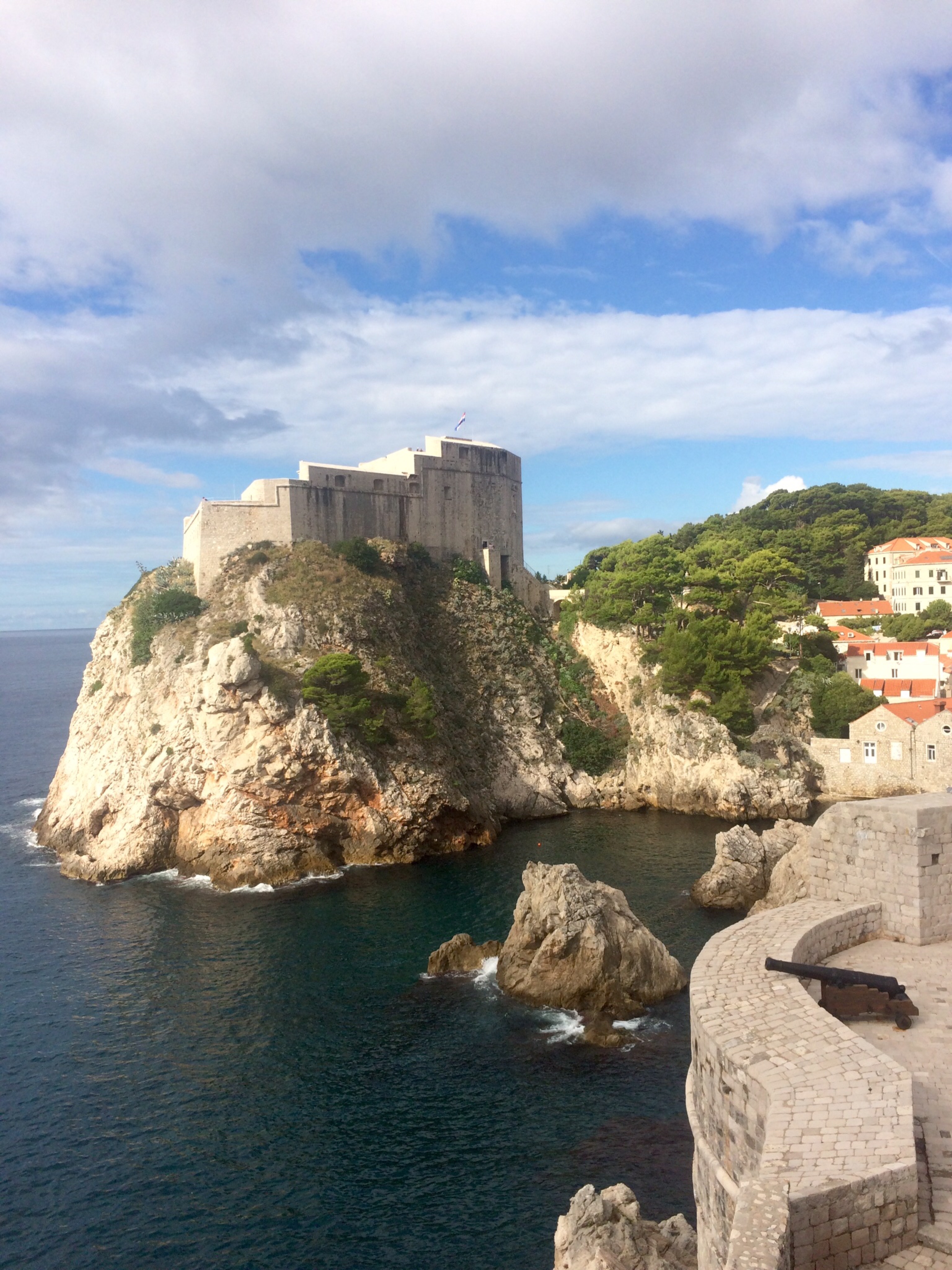
Fort St. Lawrence in the background, Fort Bokar in the foreground
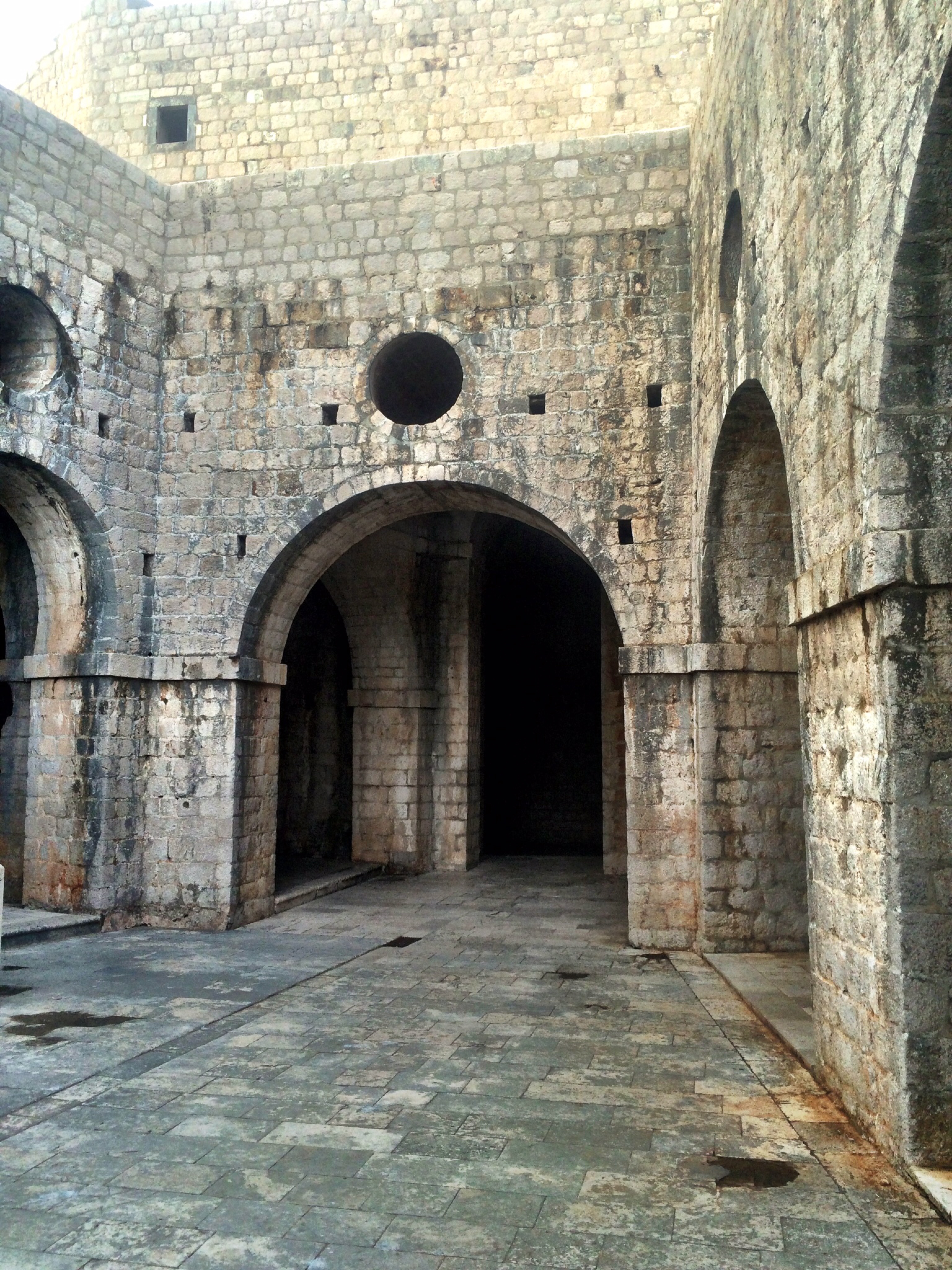
Interior of Fort St. Lawrence
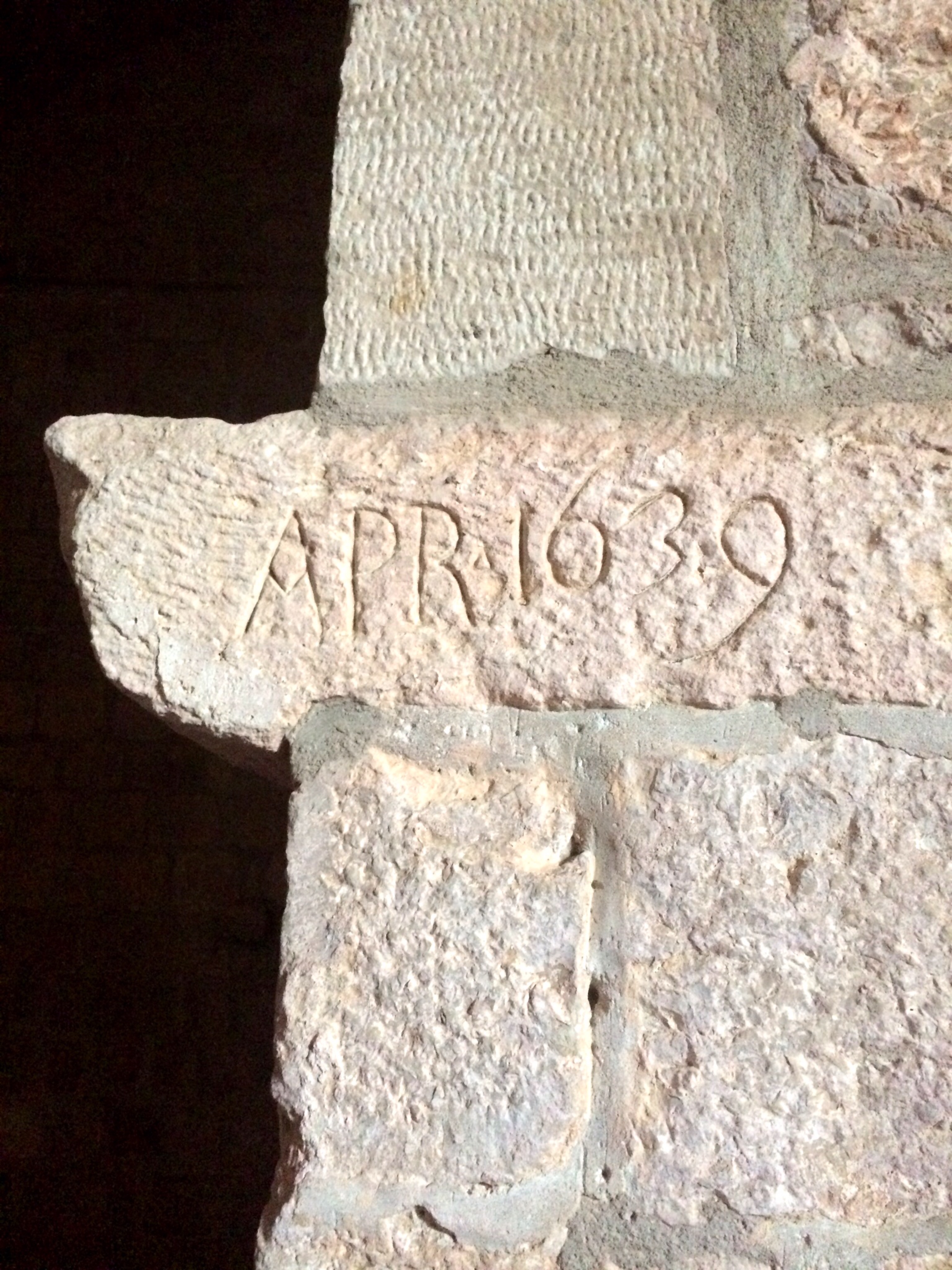
Detail in Fort St. Lawrence

Interior of Fort St. Lawrence
After our journey through, St. Lawrence Fort, Philip took us inside the city walls to visit sites within Old Town. The sun was just setting, and the tourists were thinning out. After a quick jaunt around town, we wound up in a Game of Thrones shop on the north side of town that had its own Iron Throne. Clearly we had to take photos.

Comparison of a photo from the show and the actual location

Iron Throne replica | www.theadventurelusts.com
After ending our Game of Thrones walking tour, we had booked a reservation at one of the nicest restaurants in Dubrovnik, Nautika. This turned out to be the nicest and fanciest meal we had ever had...and here we were in swimming trunks and yoga pants. Oh well, I'm sure they get that often with tourists. The restaurant is located just outside the Pile Gate and overlooks the inlet that was the filming location of Blackwater Bay. We sat right at the edge of the wall outside with a fantastic view of St. Lawrence Fort and Fort Bokar. We watched boats float by the city walls beyond and the sun set along the horizon. We ordered a 5 course meal, and it did not disappoint. Up until this point, I had never understood why people care so much about olive oil. To me, it's a bland, flat taste...but this is because I had never had good olive oil. Our server brought out a total of 4 different types of olive oil with each course, all different tastes and all delicious. He also suggested a great bold red wine, which we have fallen in love with. Plavac Mili Rozi? is from Pelješac, a peninsula just north of Dubrovnik. All the food and wine prepped us for our adventure the next morning driving north along Croatia's coast to continue our road trip.
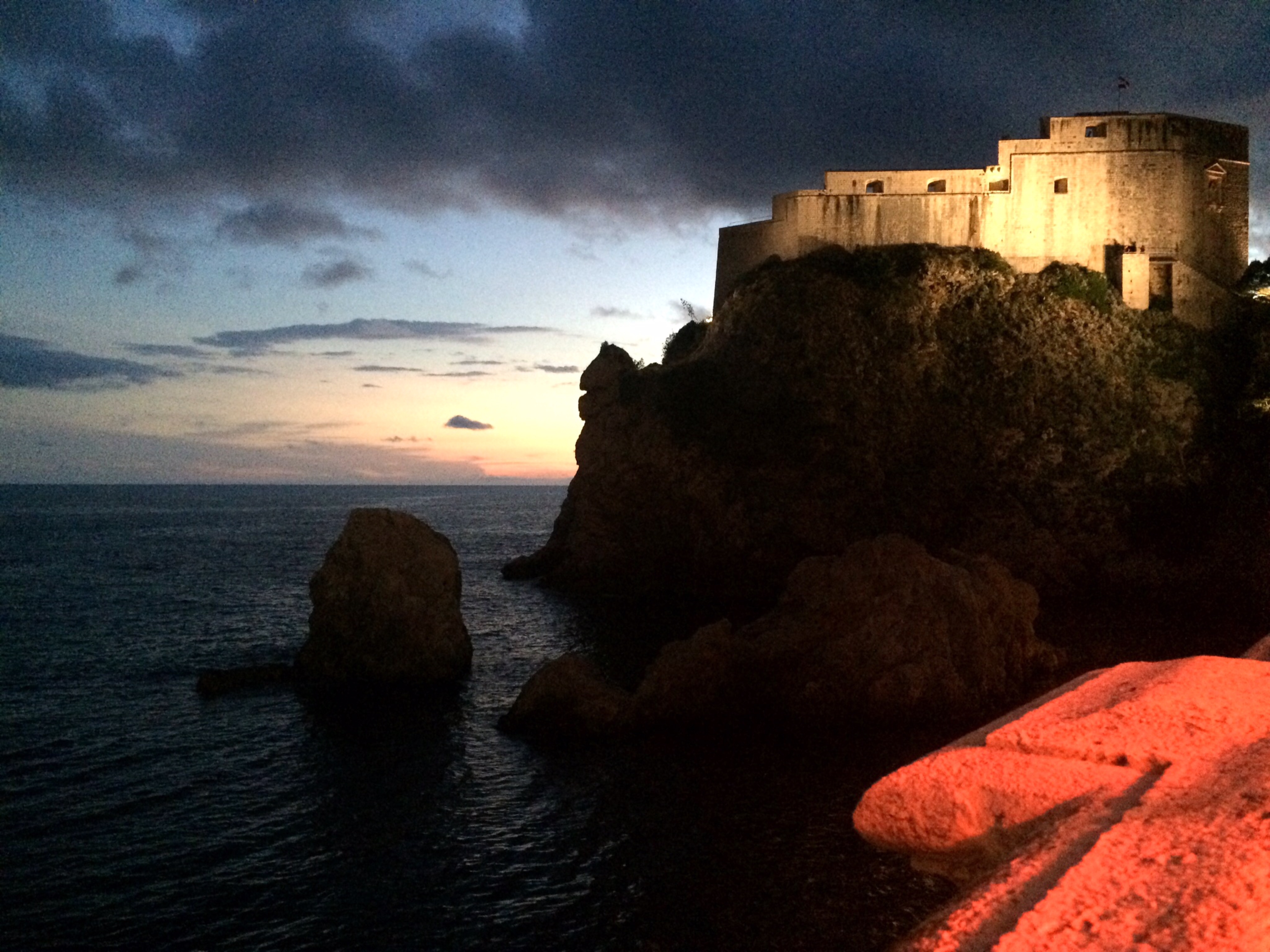
Our view of Fort St. Lawrence during dinner

Leave a Comment